

“The dose makes the poison.” In 2025, three Americans died of measles — two of them children. Dozens were hospitalized — some from the disease, some from the government’s treatment for it. In the end, fake news made measles deadly again.
The United States declared measles eliminated in 2000. In 2025, it recorded 2,288 measles cases — the highest annual total since 1991, according to the CDC. Robert F. Kennedy Jr., the Secretary of Health and Human Services, told Fox News viewers that physicians in Texas were achieving “almost miraculous and instantaneous recovery” in measles patients using cod liver oil, which he described as containing “high concentrations of vitamin A and vitamin D,” according to FactCheck.org, published on 7 March 2025. In the weeks that followed, children across West Texas were admitted to hospital with measles; others were admitted to the same facilities with vitamin A toxicity — the result of following the treatment protocol that Kennedy, in his capacity as the country’s top public health official, had publicly endorsed. The MMR vaccine had been available for more than fifty years.
This was not the first time a physician promoted vitamins as a cure for an infectious disease, attributed miraculous recoveries to his products, and declined to change course as the deaths mounted. That physician’s name was Matthias Rath. When a South African court issued an injunction against him in 2008, a Harvard study estimated that the delay to South Africa’s antiretroviral program — which Rath had actively promoted — was associated with more than 330,000 excess deaths. He too had a vitamin protocol. He too cited scientific studies. The scientists who authored those studies publicly condemned his use of them.
Gaines County, January 2025
The outbreak began in Gaines County, in the cotton and wheat flatlands of West Texas, among a Mennonite farming community with vaccination rates far below the 95 percent threshold required for herd immunity. Epidemiologists traced the index case to an unvaccinated eight-year-old boy from the Mennonite community of Cuauhtémoc, in the Mexican state of Chihuahua, who traveled to Seminole, Texas in January 2025, according to the CDC. From there, the virus moved through households, church gatherings, and schools, and eventually across state lines.
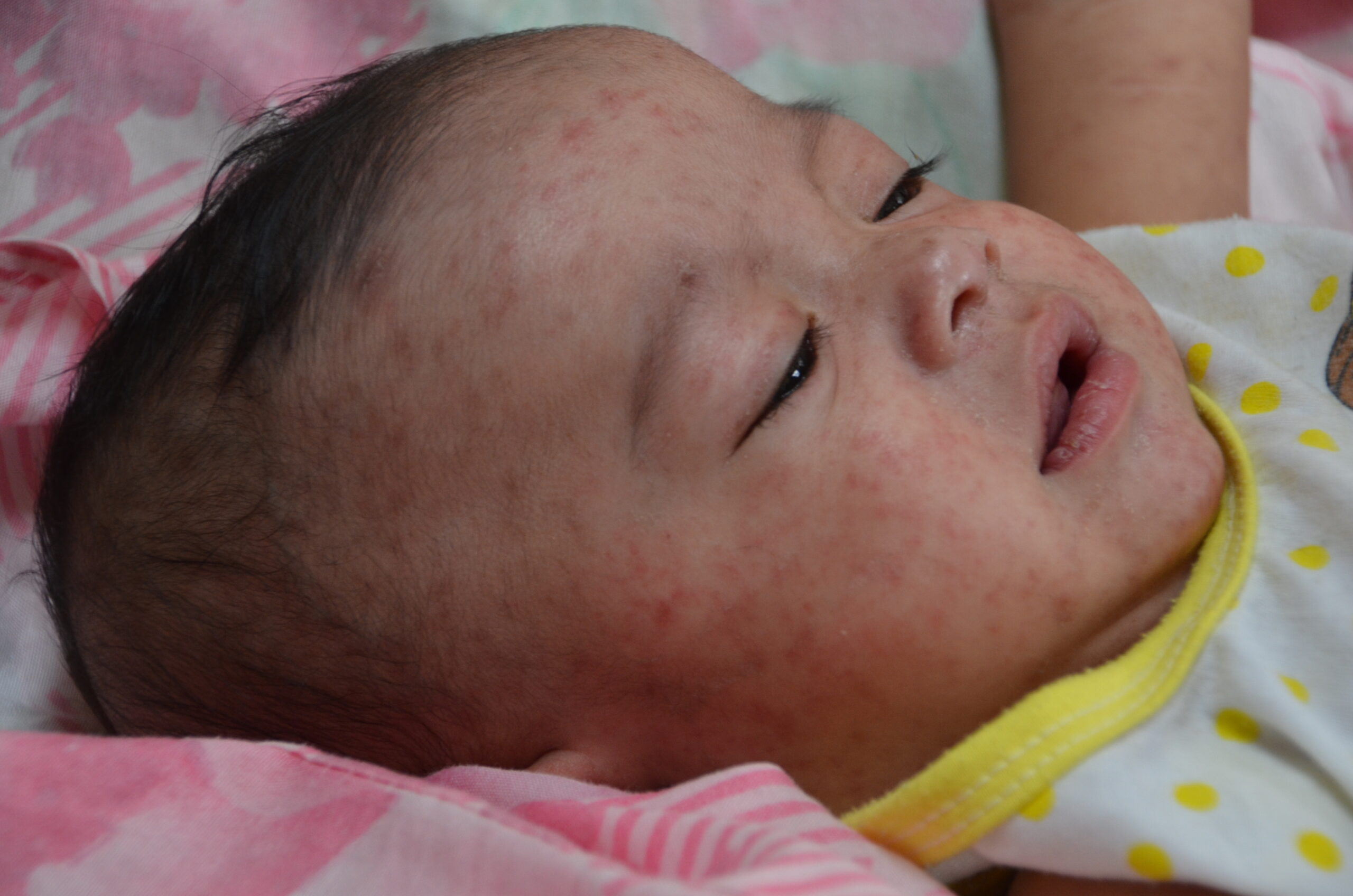
By early February, a school-age child — unvaccinated, no underlying conditions — had died in a Texas hospital. It was the first measles death in the United States since 2015. Texas declared the outbreak over in August after 762 confirmed cases. Two more people died: a second child in Lubbock and an unvaccinated adult in Lea County, New Mexico. Nationally, the United States recorded 2,288 measles cases — more than three times the number recorded in all of 2024, and the highest annual total since 1991, according to the CDC.
The about-face, and what came with it
Kennedy’s initial response to the Texas outbreak was to describe it as unremarkable. “It’s not unusual,” he told reporters on February 26, according to FactCheck.org, published on 7 March 2025. By early March, with a second death confirmed and the case count in the hundreds, he pivoted. An op-ed published on Fox News on March 2 called the MMR vaccine “crucial” and described it as contributing to “community immunity” — the language of the public health field Kennedy had spent more than two decades challenging. The same op-ed devoted three paragraphs to vitamin A, describing good nutrition as “a best defense against most chronic and infectious illnesses.”
Days later, HHS sent doses of vitamin A to Texas. The Texas Department of State Health Services had not requested them, according to Dr. Christopher Labos in The Montreal Gazette, published on 11 April 2025.
On March 4, Kennedy appeared on Fox News for an interview with Dr. Marc Siegel. He described physicians in Texas treating measles patients with “budesonide, which is a steroid,” “clarithromycin,” and “cod liver oil, which has high concentrations of vitamin A and vitamin D,” and attributed “almost miraculous and instantaneous recovery” to those treatments. He added: “We haven’t done a clinical trial on those and we should have, but we haven’t. And we’re going to,” according to FactCheck.org, published on 7 March 2025. In a March 11 interview with Sean Hannity, Kennedy falsely claimed that the measles vaccine caused deaths every year. According to the Infectious Diseases Society of North America, no deaths had been attributed to the MMR vaccine in healthy people.
Kennedy did not revise his vitamin A recommendation after the toxicity cases became public. He did not apologize. On May 1, 2025 — with children still being treated at Covenant Children’s Hospital in Lubbock, some for measles, some for elevated vitamin A levels and abnormal liver function — he told reporters that there were “many, many good ways to treat measles and doctors need to know that,” according to CBS News, published on 1 May 2025. He announced that HHS would ask the CDC to develop new clinical guidance. The CDC subsequently published a document acknowledging that “some Americans may choose not to vaccinate” and pledging to “support all families — regardless of their vaccination status — in reducing the risk of hospitalization, serious complications, and death from measles.” The guidance did not identify vaccination as the primary intervention.
The vitamin A protocol had not emerged from a clinical trial, a peer-reviewed hospital study, or a public health institution. Kennedy attributed it to two Texas physicians — one of whom had previously promoted an asthma inhaler as a COVID-19 “silver bullet,” and another whose name appeared on the website of the anti-vaccine nonprofit Kennedy had founded and led. The scientific paper Kennedy cited — a 2010 meta-analysis of studies conducted in sub-Saharan Africa — contained, in the same document, evidence that the MMR vaccine reduces measles disease by 85 percent. Kennedy cited the paper; he did not mention that finding. By the end of 2025, the misinformation that had driven the protocol had contributed to a public health crisis still producing cases across North America — and to a global emergency in which approximately 95,000 people died from a vaccine-preventable disease.
The physicians Kennedy had named as sources were not drawn from academic medicine or public health research. They were drawn from his own network — the same network that, five years earlier, had been promoting a different miracle cure for a different respiratory disease.
Vitamin A in a country where nobody is deficient
The recommendation to use vitamin A in measles cases has a real, if narrow, evidential basis. Measles infection depletes the body’s stores of vitamin A. In populations where vitamin A deficiency is already common — primarily in sub-Saharan Africa and parts of South Asia — this depletion worsens outcomes. Studies have shown that administering two high-dose supplements of vitamin A during a measles infection reduces mortality in vitamin A-deficient children under two in those settings.
The key phrase is “vitamin A-deficient.” The 2005 Cochrane systematic review — the most comprehensive analysis of the question — examined six randomised controlled trials covering approximately 2,000 children. Its conclusion: no overall significant reduction in measles mortality when vitamin A was given. A mortality benefit appeared only when the analysis was limited to three of the six studies, all conducted in Africa, all covering children under two. In those studies, mortality fell from 10.7 percent to 1.9 percent with two doses. The non-African studies — conducted in Japan and England — showed no benefit. A 2021 study in Italy showed no reduction in mortality or complications, according to the Cochrane review published on 19 October 2005.
“In resource-rich countries, where vitamin A deficiency is rare, vitamin supplementation doesn’t seem to do anything,” wrote Dr. Christopher Labos, a cardiologist at McGill University, in The Montreal Gazette on 11 April 2025. “Once your body receives the required amount it needs, extra doses have no effect.”
Vitamin A is fat-soluble. Unlike water-soluble vitamins, which the body excretes in excess, fat-soluble vitamins accumulate in liver tissue. The World Health Organization recommends two specific high-dose therapeutic supplements, administered under clinical supervision, in cases involving documented deficiency. Cod liver oil — which Kennedy also recommended — contains vitamin A at concentrations that would require consuming dangerous quantities to reach the lower end of the therapeutic dose.
Between January and March 2025, America’s Poison Centers recorded 86 pediatric vitamin A exposures — a 38.7 percent increase over the same period in 2024, according to a study published in June 2026. Researchers at Boston Children’s Hospital found that spikes in online searches for “vitamin A and measles” and “cod liver oil and measles” coincided directly with Kennedy’s media appearances and HHS communications. The CDC updated its clinical guidance in April 2025, noting that vitamin A “does not prevent measles and is not a substitute for vaccination,” and that high doses “can cause damage to the liver, bones, central nervous system, and skin.”
“No one should take, and no one should give to their child, vitamin A in the hopes it will prevent measles,” said Dr. Sean O’Leary, chair of the American Academy of Pediatrics Committee on Infectious Diseases, in a statement to FactCheck.org published on 7 March 2025.
Kennedy’s protocol had not come from the science. Applied to the actual conditions in West Texas — a wealthy state in a country where vitamin A deficiency is rare — the science argued against it. The protocol had come from men Kennedy already knew, men whose previous track record with miracle cures was itself a matter of public record.
The doctors behind the protocol
Kennedy identified the source of the measles treatment protocol as two Texas physicians: Dr. Richard Bartlett and Dr. Ben Edwards, whom Kennedy referred to as “Ed Benjamin.”
Bartlett’s previous contribution to public health involved the COVID-19 pandemic. He had promoted budesonide — an inhaled corticosteroid used for asthma management — as a “silver bullet” for COVID-19 and suggested it worked so well that there was no need for a COVID-19 vaccine. He prescribed clarithromycin to COVID patients as well. In 2003, the Texas State Board of Medical Examiners had subjected Bartlett to disciplinary action for allegations of inappropriate prescribing of medically unnecessary tests and medicines, including antibiotics and steroids, according to FactCheck.org, published on 7 March 2025.
Edwards had been featured on the website of Children’s Health Defense — the anti-vaccine nonprofit that Kennedy founded, funded, and directed until his Senate confirmation as health secretary.
The treatment protocol the two physicians promoted for measles — budesonide, clarithromycin, and vitamin A — was not validated for measles. “There is no cure for measles, and it can result in serious complications,” the American Academy of Pediatrics stated. “It’s misleading and dangerous to promote the idea that measles is easily treated using unproven and ineffective therapies like budesonide and clarithromycin.”
Kennedy had attributed miraculous recoveries to men whose previous miracle had not worked either. He had also, in the same Fox News op-ed, cited a specific scientific paper to justify the vitamin A recommendation. The paper made a different argument than the one he presented.
The study that was cited, and what it actually showed
In his Fox News op-ed, Kennedy cited a 2010 meta-analysis published in the International Journal of Epidemiology to support the claim that “vitamin A can dramatically reduce measles mortality.” The meta-analysis pooled the same three African studies from the Cochrane review and found, in those specific populations of vitamin A-deficient children, that two doses of vitamin A reduced measles mortality by 62 percent.
The same meta-analysis found that a single dose of the measles vaccine reduced measles disease by 85 percent. Kennedy cited the first finding. He did not cite the second.
Dr. Brett Giroir, the former HHS assistant secretary for health who was temporarily advising Kennedy on infectious diseases during the outbreak, wrote on X: “please do not rely on #VitaminA to save your child in the US — helps in Africa where there is deficiency — not here.”
“Relying on vitamin A instead of the vaccine is not only dangerous and ineffective,” said Dr. Sue Kressly, president of the American Academy of Pediatrics, “it puts children at serious risk.”
Kennedy’s selective use of a scientific study to promote a treatment against official medical guidance was not, as methods go, original. The template had existed for at least twenty years, and the man who had last used it at scale died six months before Kennedy appeared on Fox News.
Matthias Rath had a vitamin protocol, too
Matthias Rath was a German physician who, in the early 1990s, worked as a researcher at the Linus Pauling Institute in California — Pauling himself having spent the final decades of his career promoting high-dose vitamin C as a cancer treatment, a claim that two blinded Mayo Clinic trials, in 1978 and 1984, had decisively failed to support. Rath and the Institute parted acrimoniously; he was ordered in 1994 to pay the Institute $75,000. He established the Dr. Rath Health Foundation, developed a line of supplements he called “cellular medicine,” and began claiming they could treat diabetes, cardiovascular disease, cancer, and HIV/AIDS.
In 2004 and 2005, Rath’s foundation distributed tens of thousands of pamphlets in Black South African townships — including Khayelitsha, near Cape Town — claiming that antiretroviral drugs were “poison” and that his vitamin products could reverse the course of AIDS. Foundation employees, operating through the South African National Civic Organization, recruited people with advanced AIDS with offers of food parcels and instructed them to discontinue their antiretroviral medication and enroll in what Rath called a “clinical pilot study.” Five participants later stated in affidavits that they had been stripped to their underwear, photographed, and had blood drawn. Clinic workers reportedly instructed participants experiencing medical emergencies to return to the Rath clinic rather than go to hospital. “During and immediately following the vitamin trials, many people died,” reported South Africa’s Independent Online on 20 August 2008.
A Harvard School of Public Health study published in 2004, which Rath cited as supporting evidence for multivitamin supplementation in HIV patients, prompted a direct response from its own authors. “We strongly object to his irresponsible and misleading statements, as in our view they deliberately misinterpret findings from our studies to advocate against the scale-up of antiretroviral therapy,” the researchers wrote. The World Health Organization, UNICEF, and UNAIDS issued a joint statement condemning Rath’s advertising as “wrong and misleading.”
The Treatment Action Campaign and the South African Medical Association took Rath to court. In June 2008, the Cape Town High Court issued an interdict barring him from advertising his products as AIDS treatments and declared his clinical trials unlawful, according to The Guardian, published on 12 September 2008. Rath subsequently sued journalist Ben Goldacre and The Guardian for libel over their reporting on his activities. He withdrew the suit in September 2008 and was ordered to pay approximately £220,000 in costs. A chapter on Rath that had been removed from the first edition of Goldacre’s Bad Science pending the litigation was reinstated in the paperback edition in 2009.
A 2008 study by the Harvard School of Public Health, published in the Journal of Acquired Immune Deficiency Syndromes, estimated that South Africa’s failure to implement an antiretroviral program between 2000 and 2005 — the same period during which Rath’s campaign was most active, and during which President Thabo Mbeki’s government had embraced AIDS denialism — was associated with more than 330,000 excess deaths.
“This guy is killing people by luring them with unrecognised treatment without any scientific evidence,” said Dr. Eric Goemaere, head of Médecins Sans Frontières in South Africa, according to The Guardian, published on 12 September 2008.
Matthias Rath died on January 17, 2026. He did not, in any public statement before his death, revise his position on antiretrovirals.
By the time he died, the measles outbreak that had started in Gaines County had already crossed two national borders. The vitamin A controversy was the domestic part of the story. The part that killed more people happened elsewhere.
Forty dead in Mexico, two in Canada, 95,000 worldwide
The eight-year-old boy who traveled from Cuauhtémoc to Seminole in January 2025 was part of a Mennonite community that maintained ties across the U.S.-Mexico border and had vaccination rates low enough on both sides to sustain transmission. By August 2025, the Mexican state of Chihuahua alone had recorded 3,778 confirmed cases — nearly three times the U.S. national total for the entire year — and Mexico had reported at least 40 deaths and more than 17,000 infections nationally, according to CNN, published on 17 May 2026. The death toll was more than thirteen times higher than in the United States, in an outbreak that had originated on U.S. soil.
In Mexico, the vaccination gaps were partly structural and partly the product of the same misinformation circulating north of the border. Jacob Goertzen, a Mennonite man from Chihuahua, told Newsday that Kennedy was “a hero.” An unnamed mother in the same region organized what she described as a “measles party” — a gathering intended to expose unvaccinated children to the virus — and told Newsday that measles infection was “a privilege.” Gloria Vega, an indigenous woman who had been vaccinated and still contracted a mild case, lost forty percent of her pay during her required quarantine. Sandra Aguirre, a nurse, spent her days doing door-to-door vaccinations in Chihuahua communities where residents told her they had heard the vaccines were dangerous.
A different chain of events had begun in Canada four months before the Texas index case. In October 2024, a traveler who attended a Mennonite wedding in New Brunswick introduced the virus to southwestern Ontario. The outbreak grew to more than 5,200 cases and two deaths before Canada lost its measles elimination status on November 10, 2025, according to the BBC, published on 3 June 2025. MMR coverage had been declining for years before the outbreak: nationally, the first dose had fallen from 89.5 percent coverage in 2019 to 82.5 percent by 2023. In southern Alberta, the decline was steeper — MMR vaccination had dropped by nearly half between 2019 and 2024, according to the BBC. Baby Kimie, a four-month-old girl in Alberta who was too young to be vaccinated, contracted measles at a routine hospital appointment. Catalina Friesen, a mobile vaccination clinic worker in the province, told the BBC: “There’s hearsay that immunisations are bad for you.” Dr. Maxwell Smith, a bioethicist at Western University, noted that Canada lacked a prominent public figure equivalent to Kennedy — but that vaccine hesitancy had risen there regardless.
The World Health Organization had identified vaccine hesitancy as one of the ten leading threats to global health in 2019 — before the COVID-19 pandemic disrupted routine immunization schedules in dozens of countries and provided misinformation with new audiences and new distribution infrastructure. Globally, the WHO estimated that approximately 95,000 people died from measles in 2025 — a disease for which a safe, effective, and inexpensive vaccine has existed since 1963.
“In 2025, we should not have to treat measles in the U.S. because it is completely preventable,” Dr. James Campbell, vice chair of the American Academy of Pediatrics Committee on Infectious Diseases, said in a statement to CBS News, published on 1 May 2025. “But of course, like all preventable diseases, we do.”