



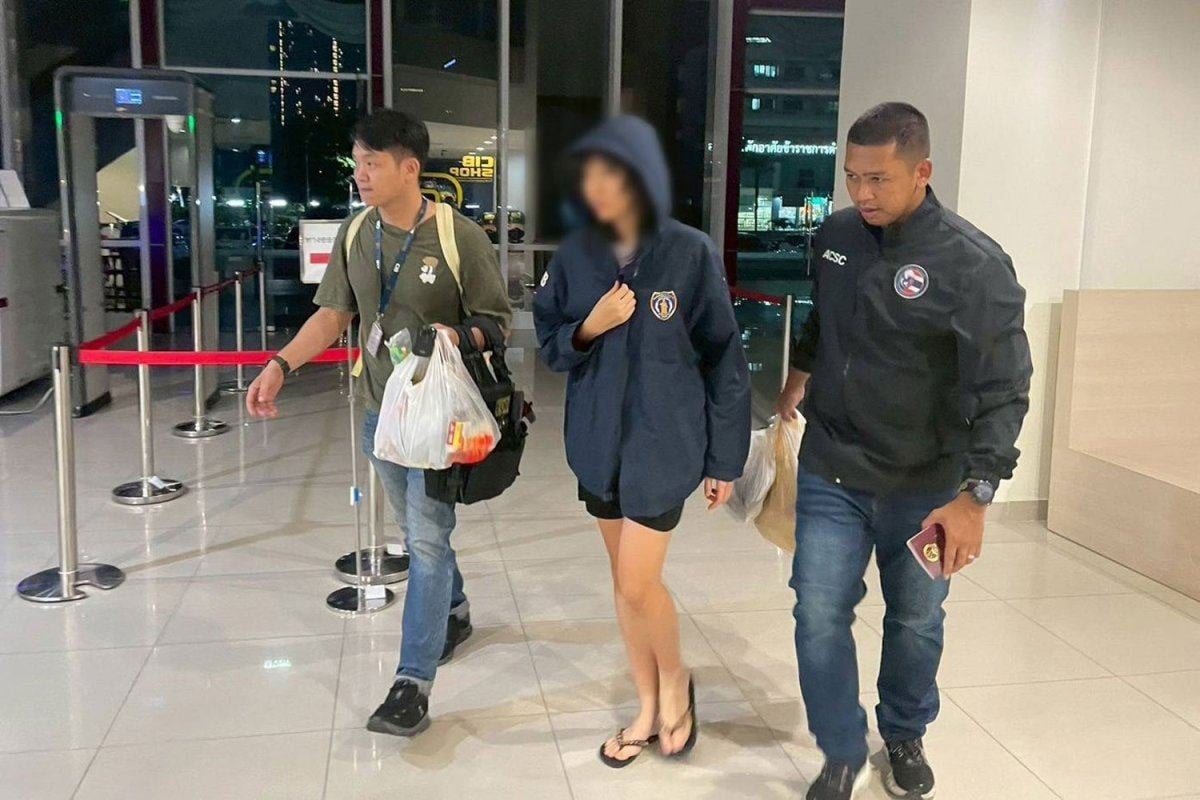
A 21-year-old Hong Kong university student was found alone in a Bangkok hotel room on June 2, 2026. She was bound with rope. She had fake wounds painted on her body. No kidnapper was in the room. The young woman, identified by police as Wang, had staged the entire scene herself — on remote instructions from scammers who had convinced her she was under investigation by Chinese authorities.
The Royal Thai Police held a press conference on June 3, 2026 to announce her rescue. They described the case as a “virtual kidnapping” — an emerging scheme in which victims are psychologically coerced into faking their own abduction, with no physical captors involved. Before police intervened, Wang’s father had already wired HK$1.4 million (about US$180,000) to the fraudsters. They were demanding HK$3 million (about US$385,000) more.
How the scam worked
The operation began between May 19 and 20, 2026. Strangers called Wang by phone. They claimed to be Chinese law enforcement officials conducting a serious criminal investigation. To avoid implicating her family, she was told to cooperate in secret and cut off contact with everyone she knew.
According to the Hong Kong Commercial Daily on June 5, 2026, the fraudsters first instructed Wang to extract money from her father. The stated reason: she needed to provide proof of funds for overseas studies. Her father transferred HK$1.4 million into her Bank of China account. The money was immediately dispersed across a network of mule accounts (bank accounts used to launder illicit funds), according to RTHK (Hong Kong’s public broadcaster) on June 6, 2026.
On May 31, 2026, Wang boarded Hong Kong Airlines flight HX767 alone. She landed in Bangkok at approximately 2:36 a.m. on June 1, according to VoiceTV/LINE Today on June 3, 2026. She checked into a hotel in the Lat Krabang district. She then hired a taxi and went shopping — on a list the scammers had given her: rope, zip ties, a knife, body paint, and red lipstick.
The staging
Back in her room, Wang applied fake wounds with the paint and cosmetics. She tied herself up. She filmed videos of herself in apparent distress. The footage went to the scammers, who forwarded it to her father via WeChat alongside a ransom demand for HK$3 million.
Her father had been caught in a similar scheme before. He recognized the pattern, refused to pay, and filed a report with the Hong Kong Police Force (HKPF), according to The Bangkok Insight on June 3, 2026.
The HKPF immediately contacted the Royal Thai Police’s Anti-Human Trafficking Division. Investigators reviewed surveillance footage and hotel check-in records. Within five hours, they traced Wang to a hotel in Bang Phli district, Samut Prakan province (bordering Bangkok) — where she had moved at the scammers’ direction, using a fake passport image they had sent her digitally. When police entered the room, she was still on a video call with the scammers.
A trafficking risk averted
“This case reflects a form of transnational criminal behavior that relies on technology and psychological manipulation to coerce victims without any physical contact,” said General Thatchai Pitaneelaboot, Director of the Royal Thai Police’s Anti-Human Trafficking Centre, at the June 3 press conference relayed by Thai PBS. He added that had police not intervened in time, Wang could have been directed to a neighboring country, with a real risk of being trafficked.
The investigating officer, Sub-Lieutenant Colonel Teeraphan Homchan of the Anti-Human Trafficking Division, confirmed that Wang was not acting freely. She was under complete psychological control throughout. No accomplices were physically present.
Wang’s parents flew from Hong Kong as soon as their daughter was located. She returned home safely. The Thai government confirmed the operation in a statement published on thailand.go.th on June 4, 2026.
Investigation ongoing
In Hong Kong, the case has been classified as “obtaining property by deception,” according to RTHK on June 6, 2026. Police are investigating the local bank accounts into which the HK$1.4 million was transferred. No arrests had been announced as of publication.
The Royal Thai Police noted that virtual kidnappings remain rare in Thailand but are proliferating in other countries. The scheme relies entirely on psychology: impersonation of authorities, isolation of the victim, and sustained panic. Police advised anyone who receives threatening calls demanding money transfers or solo travel to contact authorities immediately without complying.
“These criminals did not carry out an actual abduction. But the harm inflicted on victims and their families is real.”
— General Thatchai Pitaneelaboot, Director, Anti-Human Trafficking Centre, Royal Thai Police, press conference of June 3, 2026.